

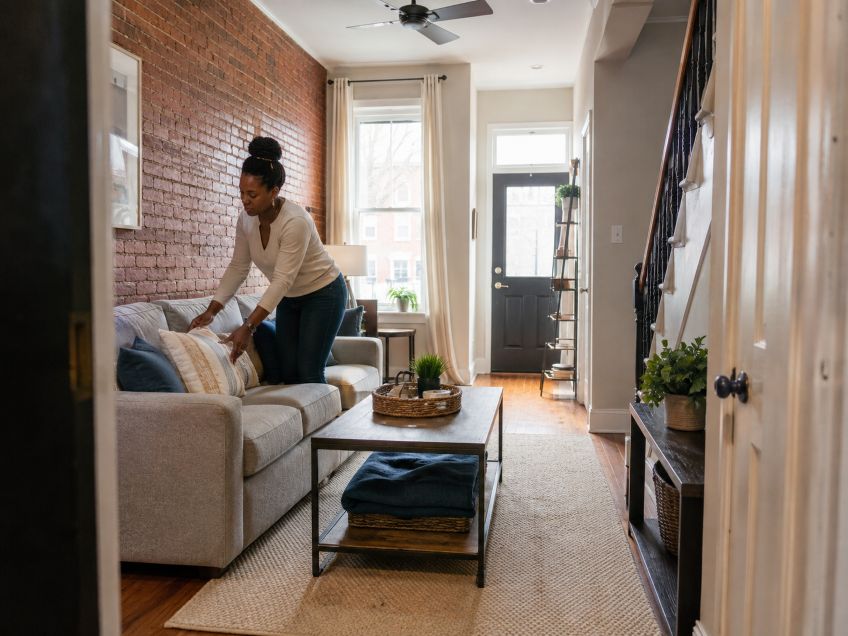
Preparing a rowhome for guests is usually less about making every room perfect and more about using limited time well. Baltimore rowhouses often have deep, narrow floor plans, which can make clutter and dust more noticeable in shared spaces. Baltimore City historic preservation guidelines describe the traditional rowhouse footprint as narrow and deep, a layout that rewards an organized cleaning plan.
When guests are arriving soon, work in the order they will experience the home. Start with the entry, then move through shared rooms, the kitchen, and the bathroom before checking sleeping areas. Homeowners who are short on time may also use a residential house cleaning service for detailed work while handling personal items and guest setup themselves.
Step 1: Clear Surfaces Before Cleaning
Begin by removing items that do not need to be out. Put mail away, return shoes to storage, fold blankets, and clear counters. This makes rooms feel calmer and gives you direct access to the surfaces that need attention.
Avoid moving clutter from one room to another. Use a basket for items that belong elsewhere, then put them away in one trip. In a narrow home, fewer back-and-forth trips can save time.
Step 2: Work From Dry Tasks to Wet Tasks
Dust before mopping or wiping floors. Start with shelves, tables, window ledges, baseboards, and other surfaces where dust settles. The U.S. Environmental Protection Agency recommends damp dusting because it helps keep settled particles from becoming airborne again. Regular vacuuming can also reduce indoor particulate matter.
If the home was built before 1978, take extra care around chipped or deteriorating painted windows, doors, and trim. The U.S. Environmental Protection Agency warns that older homes are more likely to contain lead-based paint and recommends damp cleaning instead of aggressive abrasion when lead is known or suspected.
Step 3: Give the Kitchen Extra Attention
Guests often notice the kitchen because food, drinks, and serving items move through it. Clear the sink, wash dishes, wipe cabinet pulls, clean appliance handles, and remove old food from visible refrigerator shelves. Finish with counters and the table.
The Centers for Disease Control and Prevention advises cleaning household surfaces with soap or detergent and paying regular attention to frequently touched areas. For food-preparation surfaces exposed to raw meat or poultry, the U.S. Department of Agriculture recommends cleaning first and sanitizing afterward with a suitable food-safe method.
Step 4: Reset the Bathroom
A guest bathroom should be dry, stocked, and easy to use. Clean the toilet, sink, mirror, faucet, and shower or tub. Replace used towels with clean ones. Refill soap and place extra toilet paper where guests can find it.
Moisture matters in a small bathroom. The U.S. Environmental Protection Agency recommends using an exhaust fan or opening a window during and after showers to reduce dampness. It also advises fixing leaks promptly because moisture control is central to limiting mold growth.
Step 5: Finish Floors and High-Touch Areas
Once dusting and surface cleaning are done, vacuum rugs and carpets, then mop hard floors if needed. Work from the farthest point of the room toward the exit so you do not walk over freshly cleaned areas.
Do a final pass on doorknobs, light switches, stair rails, remote controls, and cabinet handles. The Centers for Disease Control and Prevention identifies frequently touched surfaces as areas that should be cleaned regularly, especially after visitors. Routine cleaning is generally enough in most homes, while disinfection becomes more important when someone is sick.
Step 6: Do a Guest-Eye Walkthrough
Stand at the front door and move through the home as a visitor would. Look for overflowing trash, visible cords, pet items, empty soap dispensers, cluttered stairs, or anything blocking a walkway. Check that lamps work and that guests can find water, towels, and bathroom supplies without asking.
If you used strong cleaning or disinfecting products, ventilate the space as directed. The Centers for Disease Control and Prevention recommends good ventilation when disinfectants are used indoors and warns against mixing cleaning chemicals.
After Guests Leave, Reverse the Process
Once the visit is over, start with trash, dishes, and laundry. Then clean high-touch areas, refresh the bathroom, vacuum shared spaces, and return household items to their usual places. Deal with spills promptly instead of waiting for the next full cleaning session.
A compact rowhome that is already maintained may need about two to four focused hours for pre-guest cleaning by one person. That is a planning estimate, not a fixed standard. Homes with heavy clutter, pet hair, neglected kitchens, multiple bathrooms, or delicate historic finishes can take longer. A clear sequence makes the timeline easier to judge and leaves more time for welcoming guests into a comfortable home. This also makes the cleanup after the gathering easier to manage the next day.